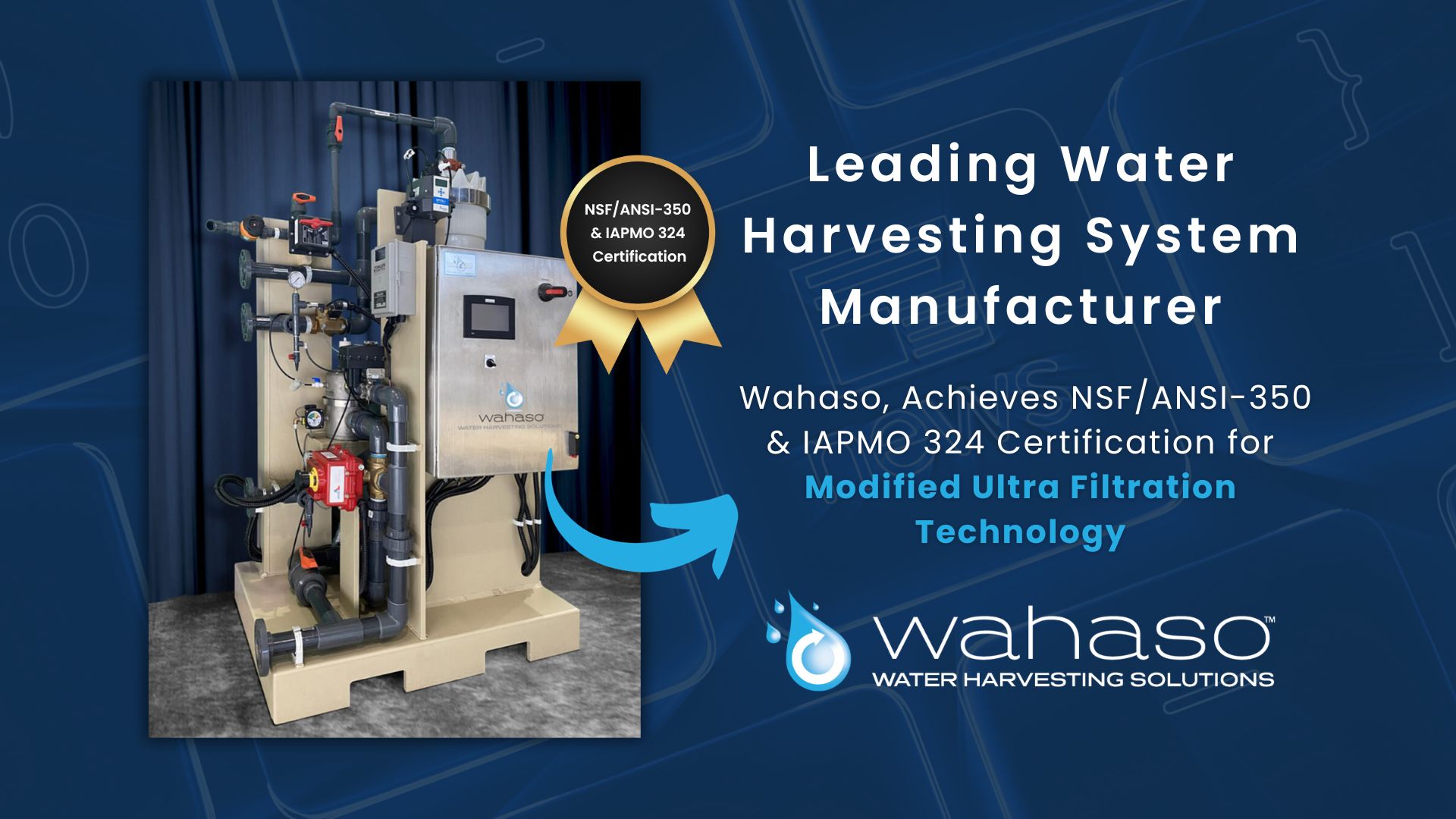
Leading Water Harvesting System Manufacturer, Wahaso, Achieves NSF/ANSI-350 & IAPMO 324 Certification for Modified Ultra Filtration Technology
For Immediate Release: Press Release
Published: Mar. 26, 2024 | by Wahaso Water Harvesting Solutions, Press Release
Wahaso, Achieves NSF/ANSI-350 & IAPMO 324 Certification for Modified Ultra Filtration Technology
Wahaso’s Modified Ultra Filtration (MUF) technology has achieved third-party certification to NSF/ANSI-350 and IAPMO 324 standards, a crucial requirement for greywater projects in California, as well as for high-level treatment demands, such as cooling tower makeup, toilet flushing, and spray irrigation, nationwide.
Modified Ultra Filtration employs a membrane-based filtration process highly effective in removing suspended solids, colloids, bacteria, pathogens, sediment, and hydrocarbons from source water.
It operates on the principle of size exclusion, allowing water molecules and small solutes to pass through, while retaining larger particles (membranes typically have a pore size ranging from 0.02 microns), with much higher contaminant removal efficiency than conventional filtration methods. When integrated into a water harvesting system, MUF plays a critical role in improving the quality of treated water, minimizing the risk of exposure to waterborne diseases, and producing effluent suitable for diverse reuse applications, including irrigation, toilet flushing, cooling tower makeup, laundry, site and vehicle fleet wash, as well as numerous industrial processes.
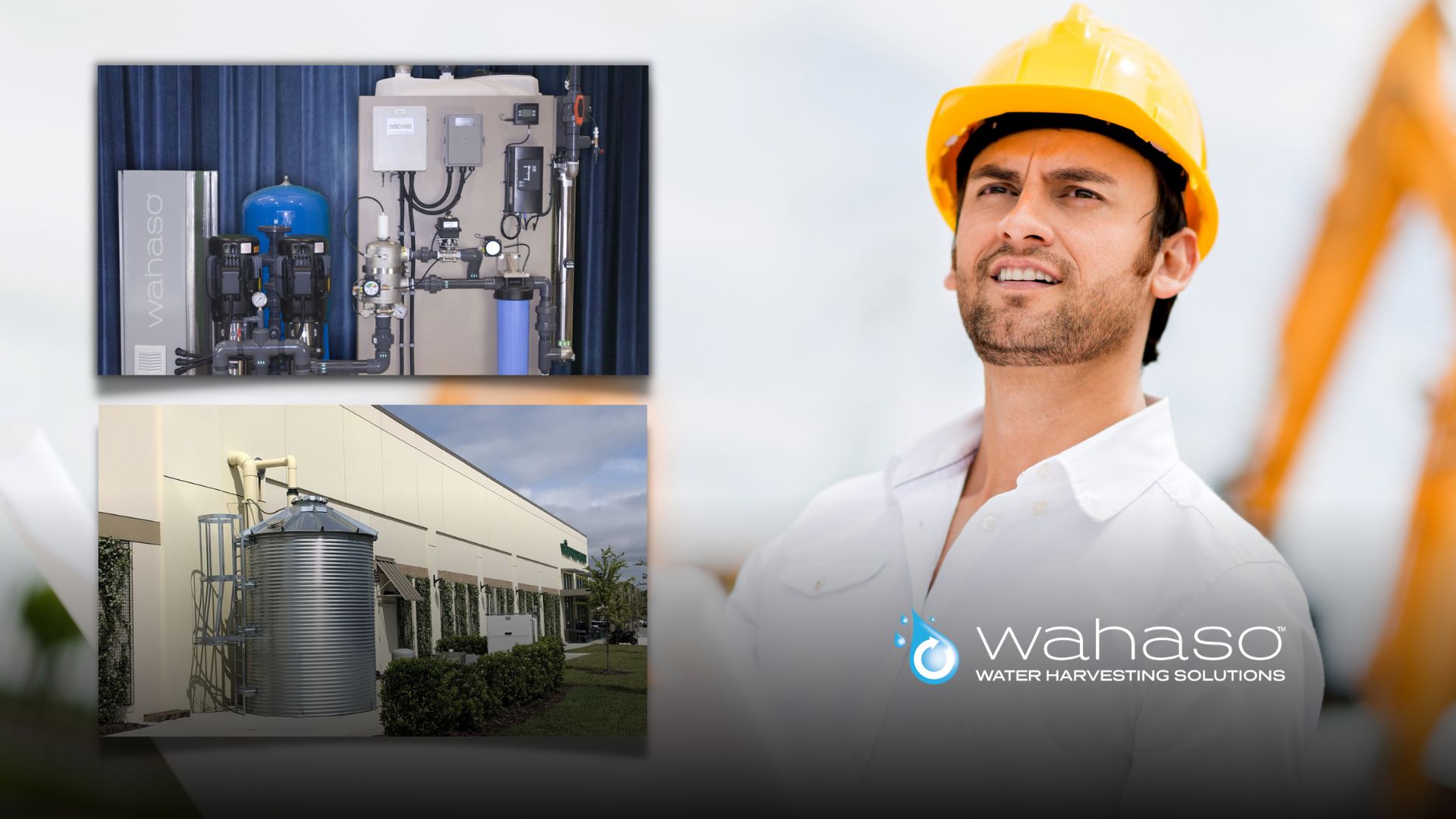
While ultrafiltration is a highly effective water purification technique…
…it requires periodic maintenance and monitoring to ensure optimal performance. Fouling, which occurs when particles accumulate on the membrane surface, can lead to reduced filtration efficiency and increased energy consumption, so regular cleaning and maintenance, along with the correct system design, are essential. Wahaso has designed an automatic self-cleaning system to return the system to normal high efficiency.
Wahaso’s MUF system proved capable of filtering source water from 35 to 500 GPM, and an effluent treatment level of 0.02 microns (1/200th of a human hair). Reduction of 6 to 7 Log Reduction Units is typical for bacteria, viruses, and pathogens with the MUF system.
Wahaso offers state-of-the-art commercial rainwater and greywater harvesting systems. Which include all types of water harvesting systems, and water harvesting system design, specifically water harvesting systems for commercial buildings. Contact us for a Free Estimate.
Since 2004
Wahaso Mission
Our mission at Wahaso is to help municipalities and commercial property owners reduce the impact of their buildings on the environment through innovative and sustainable water practices.
Call For A Free Estimate
Phone: 800-580-5350
Wahaso
Water Harvesting Solutions
Members of the U.S. Green Building Council (USGBC) www.usgbc.org
View Certifications